
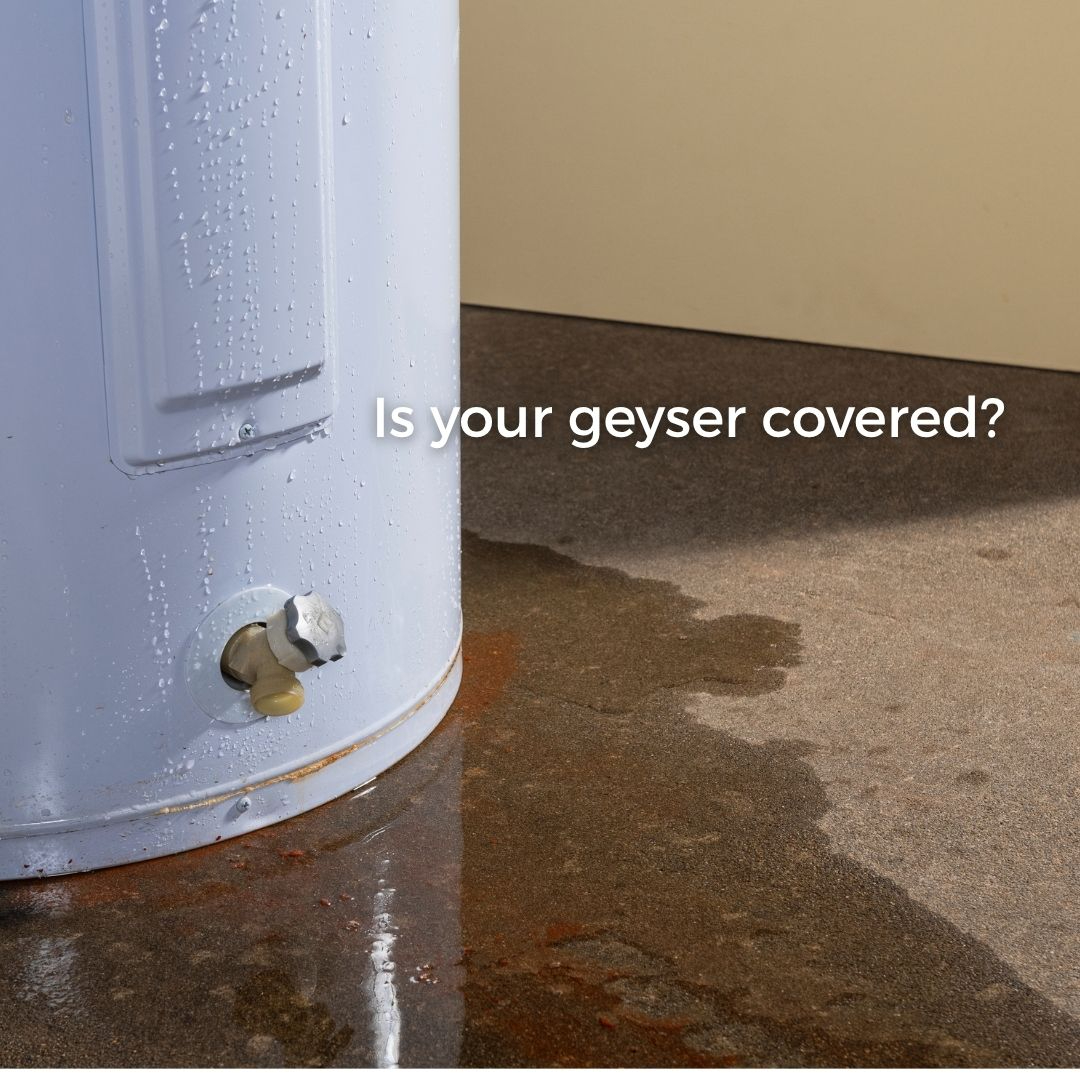
Most sectional title owners assume they're covered. Most are wrong about at least one thing — and some are wrong about all of it.
Of all the misconceptions that follow people into sectional title ownership, insurance is the one that produces the most expensive surprises. The assumption is reasonable: there's a body corporate, the body corporate has insurance, and therefore the building is covered. Job done.
The reality is considerably more nuanced — and the gaps between what owners assume is covered and what actually is covered can mean the difference between a manageable claim and a financial crisis.
In a recent conversation with Willie Roos — attorney, conveyancer, and CEO of Stratafin, one of South Africa's foremost sectional title financial services companies — we unpacked exactly where those gaps are and what every owner needs to know.
What the Body Corporate Is Required to Insure
The Sectional Titles Schemes Management Act requires the body corporate to insure the buildings of the scheme — the structure, the common property, and the units themselves — to their replacement value.
This insurance is funded through your monthly levy. Every owner contributes a portion toward the body corporate's insurance premium as part of their levy payment.
The policy covers all units in the scheme under a single arrangement, and the insured values must be reviewed and updated every three years, with those values approved by owners at the Annual General Meeting.
So far, so straightforward. But here's where it starts to get complicated.
The Geyser Question
Ask most sectional title owners whether their geyser is covered by the body corporate's insurance and they'll say yes. In many cases, they'll be wrong — or at least, they won't know for certain.
The Sectional Titles Schemes Management Act places responsibility for warm water reticulation — which includes the geyser — on the individual owner, even if the geyser is located on common property such as a roof space or shared utility area.
As Willie Roos explains: "Warm water reticulation in terms of the act is actually the owner's responsibility."
However — and this is the important caveat — many body corporate insurance policies do include geysers, because insurers want to insure as much as possible and it's administratively simpler for schemes to have everything under one policy.
The critical point is that the scheme is not obligated to insure your geyser unless the owners have made that specific decision at an AGM. Without that resolution, the body corporate's insurer is under no obligation to cover it.
Some schemes, after a high volume of geyser-related claims, have specifically removed geysers from their policies to reduce premiums. If your scheme has done this, you are personally responsible for insuring your geyser — and you may not know it has happened unless you've read the policy.
The practical step: Ask for the body corporate's current insurance schedule and confirm whether geysers are listed. Don't assume.
Resultant Damage: The Expensive Grey Area
Resultant damage is the secondary damage caused by an insured event. If a geyser bursts and floods your ceiling, saturates your floors, damages the unit below you, and ruins built-in cupboards and appliances — all of that secondary damage is resultant damage.
Whether the body corporate's policy covers resultant damage depends entirely on the specific scheme's policy. Some include it. Some have removed it after periods of heavy claims. Some cover it only up to a certain limit.
Willie Roos highlighted a telling example from his experience: a scheme where two geyser-related claims in a single year exceeded the scheme's entire annual insurance premium. The inevitable consequence the following year was either a premium increase so significant it pushed levies up substantially — or the removal of geyser and resultant damage cover from the policy altogether.
Either way, owners pay. Either through higher levies or through uninsured exposure.
Pipes: Who Is Responsible?
Pipes generate more sectional title insurance disputes than almost anything else — partly because they're invisible until they fail, and partly because the rule governing responsibility is straightforward in principle but complicated in practice.
The rule is this: if a pipe services only your unit, it is your responsibility. If it services the scheme generally, it is common property and the body corporate's responsibility.
In practice, determining which category a specific pipe falls into often requires opening walls. A main supply line is common property. The branch that feeds only your kitchen is yours. A common riser serving multiple floors is the scheme's. The connection from that riser to your unit is yours.
When a pipe bursts in a shared wall and the water damages two units, the question of whose pipe it was — and therefore who is liable — can become genuinely complex.
Willie Roos puts it plainly: "If the resultant damage follows as a result of a burst of a pipe that you are responsible for, then the claim will not cover that and that will have to be claimed under your household insurance."
And here's where the next problem emerges: your household insurer may say the damaged kitchen cupboards or flooring are fixed to the property and therefore immovable — and your household contents policy only covers movables. You find yourself in a gap between two policies, with neither paying out.
What Happens If the Building Burns Down?
This is the question most owners never think to ask until it's too late.
If your unit is bonded, your bank is noted as a beneficiary on the body corporate's insurance policy. This is a standard requirement of any bond agreement. If the building is destroyed and a claim is paid out, your bank receives the proceeds first — up to the outstanding bond amount.
If the insurance payout on your unit is R700,000 and your outstanding bond is R500,000, the bank is paid R500,000 and you receive R200,000. The bank is settled. You are left with a share in the land.
If the insurance payout equals or is less than the outstanding bond, you receive nothing from the insurance — and you are left as a joint owner of a piece of land.
What happens next depends on what the body corporate decides to do with that land. If the scheme rebuilds, your section is reinstated and your bond continues over it. If the scheme is wound up and the land is sold, each owner receives a proportional share of the sale proceeds in accordance with their Participation Quota.
The Valuation Problem
The body corporate is required to review insured values every three years and obtain professional valuations to support those figures. Those values are then approved by owners at the AGM.
The standard insured value is based on a cost-per-square-metre replacement figure that reflects a standard level of finish. If your unit has been renovated with finishes that significantly exceed the standard — high-end kitchen, imported materials, luxury bathroom — the replacement cost of your unit may be higher than what the body corporate's policy covers.
Your bank, noting this discrepancy, may require additional insurance cover to protect their bond. That additional premium is not absorbed into the general levy. It is charged directly to your individual levy account — an ongoing monthly cost for as long as you own the unit.
This is one of the less obvious consequences of over-capitalising a sectional title unit: not only are expensive finishes unlikely to be recovered at sale, but they can generate an ongoing insurance cost that doesn't go away.
Your Personal Insurance: What It Must Cover
Given everything above, every sectional title owner needs a personal insurance policy that specifically addresses the gaps the body corporate's policy may leave.
At minimum, your personal cover should include:
Contents — furniture, appliances, personal belongings, and anything movable inside the unit.
Improvements and fixtures — any upgrades you have made to the unit above the standard specification: tiling, built-in cupboards, kitchen installations, bathroom fittings. These are typically not covered by the body corporate's policy and may not be covered by a standard contents policy either.
Liability — if a visitor is injured in your unit, or if your pipe causes damage to the unit below you, you need liability cover.
Geysers and resultant damage — if your body corporate's policy does not include these, your personal policy must.
The key discipline is to read both policies — the body corporate's and your own — and confirm that together they cover everything. Don't assume overlap. Gaps are common and expensive.
The Shake Test
Willie Roos references a useful mental framework, credited to Professor Paddock and insurance specialist Mike Addison, for thinking about sectional title insurance responsibility:
"What you shake and what falls out — that is the owner's responsibility. What is stuck — that is the body corporate's responsibility in general."
In other words: movables and contents are yours. The structure is the body corporate's. But with the important exceptions of warm water reticulation, pipes that only service your unit, and improvements that exceed the standard specification — all of which sit with the owner regardless of whether they're fixed to the building.
The One Thing to Do This Week
If you own a sectional title unit and you haven't read your body corporate's current insurance schedule, do it.
Ask your managing agent for the document. Read it. Understand specifically whether geysers are covered, whether resultant damage is covered, and what the insured replacement value of your unit is.
Then call your personal insurer and confirm that your policy fills whatever gaps exist.
This is not a complex or expensive exercise. But discovering the gaps after a burst geyser has flooded two floors of a building is both complex and very expensive.
Know what you're covered for. Before you need to find out.