
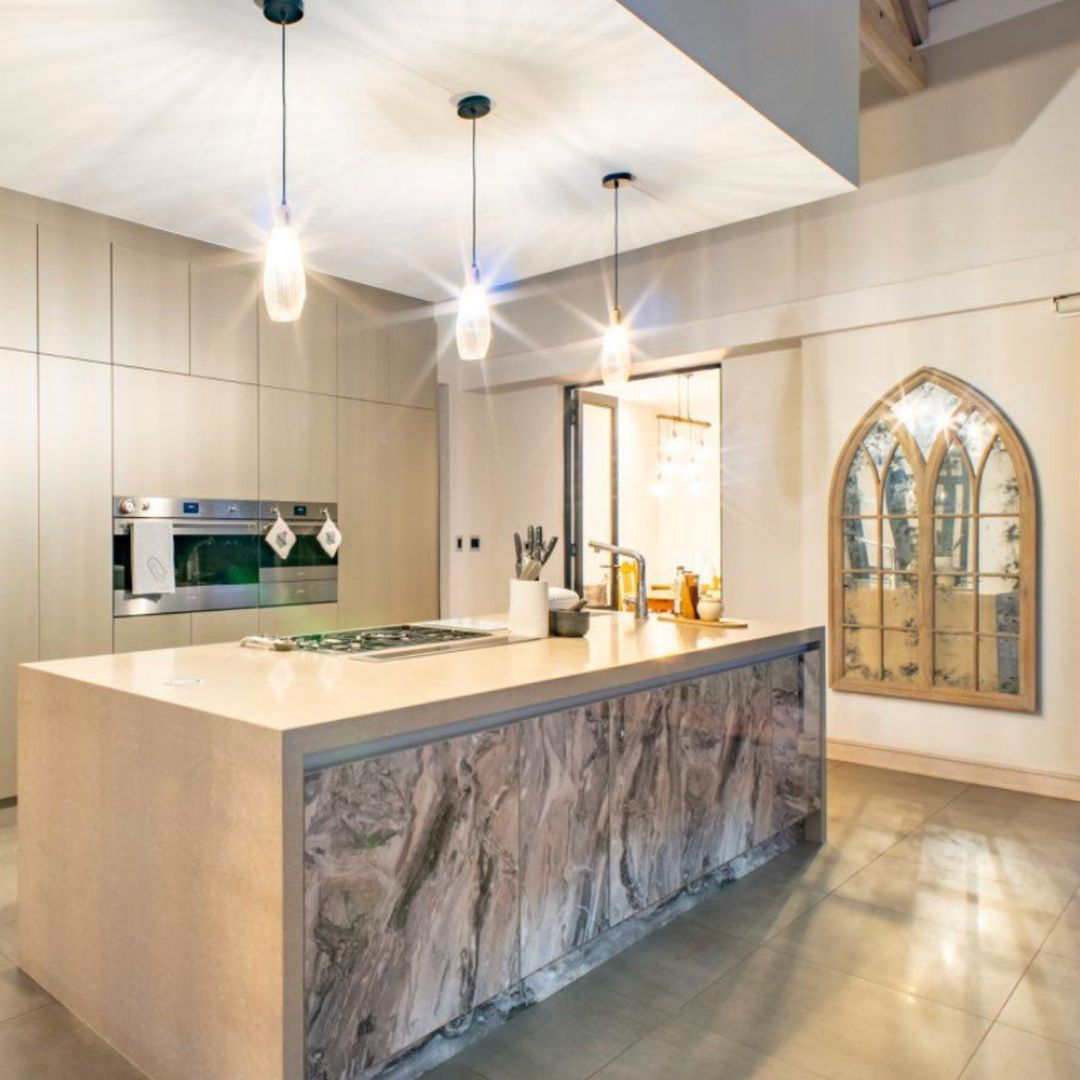
Every year, thousands of South African homeowners spend money on renovations they believe will add value to their home. Most of them are right. A meaningful minority of them are wrong — sometimes by hundreds of thousands of rand.
The difference between the two groups is not budget, taste, or luck. It is a small set of well-established principles about which renovations recover their cost at resale, which ones add lifestyle value without recovering financially, and which ones actively destroy value the moment they're finished.
The homeowners who understand these principles renovate profitably. The ones who don't spend money on the wrong things and discover the truth only at the moment they try to sell.
The renovation that always pays back
There is one renovation that reliably recovers its cost at resale in South African residential property, and often more than recovers it: the kitchen.
Kitchens are the room every buyer walks through with the sharpest eye. According to renovation ROI data published by South African property professionals — including Private Property, Property24, and reporting from the Ooba Group — a well-executed mid-range kitchen renovation in South Africa reliably recovers most of its cost at resale — often all of it, sometimes more, over longer holding periods.
The reason is straightforward. Buyers make emotional decisions in kitchens. A dated kitchen carries a perceived cost — the buyer mentally deducts renovation money from the offer. A well-designed, current kitchen removes that deduction and often adds an emotional premium on top.
The kitchen renovation that recovers its cost has three consistent features:
It matches the price point of the home. A R500,000 kitchen in an R8 million home is proportionate. The same kitchen in an R2 million home is over-capitalisation — the neighbourhood ceiling caps what any buyer will pay.
It doesn't remove walls unless necessary. Structural changes push renovation cost up disproportionately without lifting resale value at the same rate. Cosmetic and layout-within-existing-footprint changes deliver the strongest returns.
It uses timeless materials. Neutral cabinetry, quality stone counters, restrained hardware. Trend-led choices — high-gloss lacquer, statement colours, unusual tile shapes — date quickly and can subtract value within a few years.
For homeowners planning to sell within one to three years, the kitchen is the single highest-return renovation available in the South African market.
The renovations that reliably pay back
Two other renovations recover their cost at rates comparable to kitchens — sometimes higher — depending on the property type and buyer profile.
Bathrooms. A modern, well-executed main bathroom renovation is one of the most reliably profitable improvements a South African homeowner can make. It typically recovers most of its cost at resale, and often more — particularly in older homes where the existing bathroom is materially dated and clearly reads to buyers as a job they would need to do themselves.
Solar and inverter installations. Following the load-shedding cycles of the past several years, the South African residential property market has increasingly priced solar and backup power into home values. Buyers now actively search for load-shedding-resilient homes, and homes with paid-off, well-installed solar systems have shown strong resale premiums in recent Ooba and Private Property reporting. A homeowner installing owned (not financed or rented) solar in 2026 is generally adding both immediate lifestyle value and durable resale value.
A note on financed or rented solar: if the solar system is under an active rental or financing agreement, the picture changes materially. The obligation transfers with the property, and the resale value benefit reduces or reverses depending on the terms. Buyers are increasingly wary of inheriting rental solar contracts.
The renovation that never pays back
There is a corresponding renovation that consistently fails to recover its cost in the South African market, and often destroys value outright: the swimming pool.
A new swimming pool in South Africa typically costs between R150,000 and R400,000 depending on size, finishes, and site conditions. It usually recovers only a fraction of that cost at resale — often less than half. The remainder is unrecoverable.
The reasons are straightforward. A pool is a lifestyle asset for the current owner and a maintenance liability for the next one. Many buyers actively deduct value from homes with pools — particularly buyers with young children, buyers with limited time, or buyers who don't swim. The pool that felt aspirational to install becomes a negotiation point on the way out.
Pools installed for the current owner's use are a lifestyle decision, and can be a rewarding one. Pools installed for resale value almost never make sense.
Other renovations to approach with care
Several other renovations either fail to recover their cost or actively reduce it, depending on execution:
Over-personalised interiors. Bold colour schemes, unusual layouts, statement finishes that reflect the current owner's taste rather than a broad buyer's. The stronger the personality, the narrower the buyer pool. Neutral palettes typically outperform character-led ones in resale.
Additions that push the home above the neighbourhood ceiling. A five-bedroom home in a street of three-bedroom homes will hit a resale ceiling regardless of quality. The market prices the neighbourhood first, then the home. Adding square metreage above what the area supports is the fastest way to over-capitalise.
Unpermitted alterations. Additions, enclosures, or structural changes made without approved municipal plans create post-sale liability. Under South African municipal regulations, buyers who inherit unapproved structures inherit the compliance risk — including potential demolition orders. Conveyancers check. Deals collapse. If it's worth building, it's worth permitting.
Luxury upgrades that don't match the home. Imported taps in a mid-market home, high-end appliances in a starter kitchen, feature lighting in a home without a design language to support it. Buyers pay for coherence, not for scattered luxury.
The principle that connects all of this
Every profitable renovation in South Africa is doing one of two things: removing a perceived cost from the buyer's mental deduction, or adding a broadly-desired feature in a way that matches the home's price tier.
Every unprofitable renovation is doing the opposite: adding cost that the next buyer doesn't want to inherit, or lifting the home above what the neighbourhood supports.
The homeowners who renovate profitably tend to think about the next buyer's decision before they think about their own preferences. The ones who over-capitalise usually don't.
What renovations actually do to a sale
There is a common assumption that a renovated home will sell for materially more than an unrenovated one in the same street. In practice, this is only sometimes true.
What a well-executed renovation reliably does is help the property sell faster, stand out in the market, and appeal to modern buyers. What it does not always do is push the final selling price meaningfully above neighbouring homes.
This is a market reality that surprises many homeowners after they have already spent the money. The renovation removed the buyer's hesitation. It did not remove the neighbourhood ceiling. Two homes on the same street tend to transact within a fairly narrow price band regardless of how differently the interiors have been treated — because buyers price the street first, then the home on it.
For this reason, homeowners considering a renovation should:
Research recent sale prices in the immediate area. Not last year's — the last six to twelve months. Ask an agent for verified sold data, not asking prices.
Understand the price range of similar homes. Same bedroom count, same rough square metreage, same street or one over. The band those homes transact in is the ceiling your renovation is working against.
Set a renovation budget that aligns with the neighbourhood. Not with your aspirations, and not with what the show houses on Instagram look like. The renovation that returns is the one calibrated to the market you'll eventually sell into.
In many cases, the honest expectation is that renovations improve marketability rather than dramatically increasing the final selling price. That is still a meaningful outcome — a faster sale, less time carrying costs, fewer negotiations, a stronger position — but it is a different outcome from the one many homeowners assume they are buying when they start the project.
Renovate to sell well. Not to sell high.
What to ask before starting
Four questions decide whether a renovation will pay back or drain equity.
1. Is this renovation removing something a buyer would mentally deduct from their offer? If yes — dated kitchen, tired main bathroom, obvious cosmetic failure — the renovation is likely to recover well.
2. Is this renovation proportionate to the home's current value and the ceiling of the neighbourhood? A ten percent renovation on an R3 million home is R300,000. If your plan is materially higher, check the neighbourhood ceiling before committing.
3. Am I doing this for resale value, or for my own lifestyle? Both are valid reasons, but they lead to different decisions. Lifestyle renovations (pool, custom home theatre, unique landscaping) should be understood as personal spending, not investment.
4. Does this renovation require municipal approval, and do I have it? Unpermitted work becomes a legal liability at resale. The Property Practitioners Act now requires sellers to disclose defects and non-compliance in writing. The cost of retroactive permitting is almost always higher than doing it correctly the first time.
The short version
The renovations that reliably pay back in South Africa are the kitchen, the main bathroom, and paid-off solar — in that order.
The renovation that reliably doesn't is the swimming pool.
Renovations improve marketability. They do not automatically increase the ceiling of the neighbourhood.
The homeowners who understand this before they start renovating make money on their homes. The ones who don't often discover — at exactly the wrong moment — that the renovation they loved was one the market didn't.
Renovate for the buyer you'll one day become. Not for the taste you have this year.